
Blog
Empowering Future Innovators: Modern Equipment for MERIT Master’s Study Programs
As the digital world evolves, universities are stepping up to equip the next generation of leaders with the tools they need to stay ahead in a rapidly advancing technological landscape. Master’s programs in fields like Artificial Intelligence (AI), Cybersecurity, and the Internet of Things (IoT) are now leveraging an array of sophisticated equipment to create a robust learning environment. This equipment is more than just hardware; it serves as a gateway to the hands-on, practical knowledge that is essential for students to thrive in these cutting-edge fields. Constant update of the information technology infrastructure is a must for master studies, concentrating on advanced digital skills.
MERIT project understands the need of up-to-date infrastructure and possibility to provide hands-on experience with it for their students. Therefore, during the last year MERIT project partners purchased a set of new equipment, dedicated to providing their students not only good learning environment, but to gain experience working with some modern equipment.
Equipment for Enabling the Machine Learning and Computational Power Possibilities
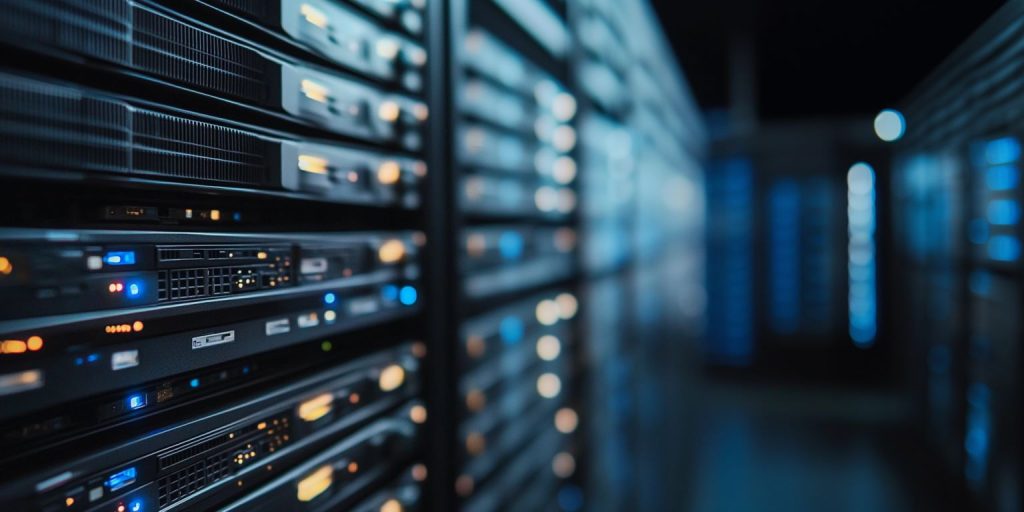
AI is one of the most transformative fields of the 21st century, and MERIT project universities are ensuring that students are prepared with the latest technologies to tackle the challenges ahead. The GPU Cluster at Universitat Politècnica de Catalunya – BarcelonaTech (UPC), for instance, with its powerful NVIDIA Quadro RTX A6000 GPUs, offers students the opportunity to explore machine learning algorithms and deep learning models at scale. With the ability to simulate and train complex neural networks, this hardware is vital for AI students to understand and optimize cutting-edge models. Additionally, Riga Technical University (RTU), Tallinn Technical University (TalTech) and Vilnius Gediminas Technical University (VILNIUS TECH) equipped their study programs with powerful computing power as DELL PowerEdge R760XA servers, SuperServer SSG-620P-ACR12H Storage and other. Those will give their students access to enterprise-level computing resources, essential for running computationally intensive AI applications.
Meta Quest 3 mixed reality devices at both TalTech and UPC offer immersive environments for students to develop and train AI applications in virtual and augmented spaces. Meanwhile VILNIUS TECH equipped a full virtual reality laboratory, video surveillance and video mapping, movement analysis system to allow their students to work with different image and video processing tasks and transforms the space into an immersive visual environment. These hands-on experience with AI-enabled mixed reality will help students better understand how to build AI systems that interact with and enhance user experiences in innovative ways.
Building Defenses for the Digital World with Model IoT Equipment
In the realm of cybersecurity, students need to be well-equipped to confront the growing number of threats in a hyperconnected world. MERIT project universities are responding by integrating state-of-the-art hardware and tools into their curriculums, ensuring that students can develop practical skills to secure both physical and digital infrastructures as well to work with different electronic and robotic devices.
During the past year, the IoT related equipment upgrade was done in Estonia and Spain. At TalTech, the three-phase power analyser will allow students to explore the intricacies of power monitoring, while the NI acquisition modules and interface devices will teach students how to collect and analyze data from various sensors and systems. Orientation on wide variety of microcontrollers, actuators and sensors was developed in Asoindel company too, which provide platform for students’ internships and hands-on projects. Students there have access to a variety of NI cDAQ chassis and sensor kits, enabling them to design and implement IoT systems with real-world applications. The hands-on experience with Raspberry Pi, ESP32-WROOM, and LoRa Core Modules allow students to build and program IoT networks, gaining experience with low-power, wide-area network communication protocols essential for modern IoT ecosystems.
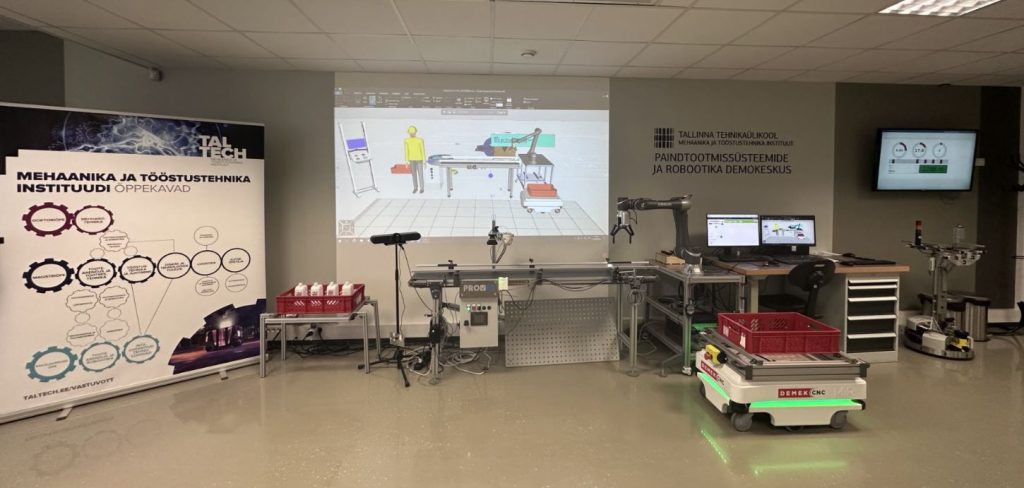
The IoT is a key driver of digital transformation, and universities are preparing students for this growing field by providing a range of IoT-focused equipment. While experience with robots give a better perception and improvement of different industry solutions. TalTech’s MIR 100 Autonomous Mobile Robot offers IoT students a physical platform for testing their skills in automation and robotics. While UPC TIAGo Mobile Manipulator Robot which can work in indoor environments allowing to perform a wide range of perception, manipulation, and navigation tasks.
Hybrid Learning and Collaborative Research
In addition to the equipment supporting individual and hands-on learning, universities are investing in tools that facilitate collaborative and hybrid learning. It allows students to engage in research and development projects regardless of their physical location. This is very relevant considering the MERIT project shares the owned infrastructure and teaching capacities with each other, therefore qualitative distance communication is very important providing better study quality.
Different 360 cameras, projectors, sound and video systems in each university add value to the university as well as the MERIT project as a whole. All of this equipment works together to create an interconnected ecosystem where students in AI, Cybersecurity, and IoT master’s study programs can develop digital skills across the full spectrum of emerging technologies. From powerful servers and GPUs to immersive VR devices and advanced sensors, the integration of these tools into curricula enables students to bridge the gap between theoretical knowledge and real-world applications.
Future Plans
The digital revolution is happening now, and students studying AI, Cybersecurity, and IoT are at the forefront of this transformation. By providing them with access to the latest tools and equipment, MERIT project partners are ensuring that they have the resources they need to develop advanced digital skills. These investments in educational technology will not only contribute to the success of individual students but will ultimately help shape the future of the digital economy. The journey is not over yet and additional purchases are planned to increase the computational power, provide access to wider range of robotic, IoT devices as well as cloud services. The future is bright for those who are prepared—and these cutting-edge resources are helping to ensure that students are ready to take on the challenges ahead.
Share this article!


